
The Bali real estate market has undergone significant changes in recent years. In addition to traditional factors such as location, architecture, and profitability, one new criterion is gaining increasing importance: the ability to stay with pets.
Pet-friendly villas in Bali are gradually evolving from a niche segment into a full-fledged market trend. This is due to global lifestyle changes, the rise in pet ownership, and the development of a tourism industry focused on long-term stays.
Today, more and more investors and developers are beginning to consider this factor when designing new properties.
Global Trend: Traveling with Pets
The pet-friendly real estate trend is directly linked to changes in the tourism industry. More and more people view pets as family members and are eager to travel with them.
According to international research, approximately 53% of travelers take their pets on vacation, and a significant portion of pet owners prefer to choose only pet-friendly accommodations.
This phenomenon is often referred to as the “pawprint economy.” The pet travel industry is growing rapidly: the global pet travel market is valued at several billion dollars and continues to grow by approximately 8-9% annually.
As a result, the tourism industry is adapting to new demands. Hotels, airlines, and vacation rental services are gradually introducing pet-friendly programs and services.
Why Bali Has Become an Ideal Destination for Pet-Friendly Accommodation
Bali has proven to be one of the destinations where this trend has been particularly evident. The island has long attracted an international community—entrepreneurs, remote professionals, digital nomads, and expats.
Many of them live on the island for months or even years. Longer-term stays often involve bringing pets with them or adopting pets once they’re there. As a result, demand for pet-friendly villas in Bali has grown significantly. Furthermore, the island offers conditions well-suited for pet-friendly living: a mild climate, spacious villas with gardens, plenty of open spaces, and well-developed infrastructure for long-term stays.
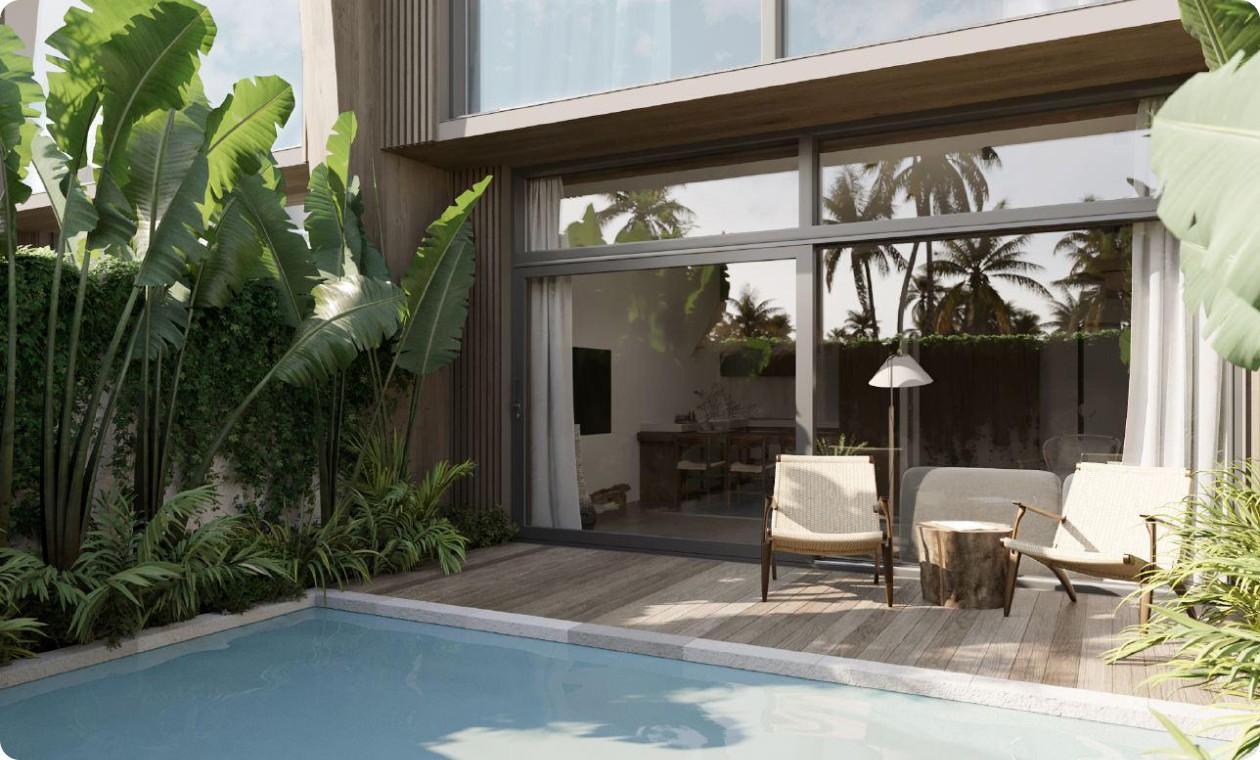
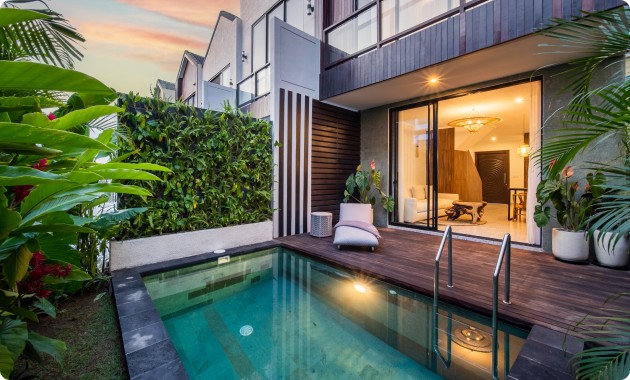
Unlike compact apartments in metropolitan areas, villas in Bali often feature private areas, swimming pools, and courtyards. This makes them pet-friendly.
Pet-Friendly Villas as a Competitive Advantage in the Rental Market
From an investment perspective, pet-friendly properties are becoming an attractive option for enhancing a property’s competitiveness.
Short-term rental market research shows that pet-friendly properties can have higher occupancy rates and attract a wider range of tenants.
The rationale is simple: pet owners face limited housing options. When a pet-friendly property comes onto the market, it automatically becomes more attractive to this category of tenants.
As a result, pet-friendly villas can find tenants more quickly and retain them longer, especially in the long-term rental segment.
The Changing Profile of a Renter in Bali
The growing demand for pet-friendly properties is also linked to the changing profile of the renter.
While most tourists previously came to the island for one or two weeks, today a significant portion of guests stay longer. These include entrepreneurs, freelancers, startup founders, and remote employees of international companies.
This demographic is more likely to travel with pets or acquire pets during extended stays. For them, pet-friendly accommodations are becoming an important factor in choosing a property.
Furthermore, the proportion of young professionals and entrepreneurs among pet owners is growing. Many millennials and Gen Z consider animals to be an integral part of the family and are unwilling to leave them at home while traveling.
This further increases the demand for pet-friendly properties.
Which areas of Bali are most popular for pet-friendly accommodations?
The demand for pet-friendly villas in Bali is especially noticeable in areas with a well-developed international environment and infrastructure for long-term stays. These are locations where people spend more than just vacations; they live there for months or even years. These are the places where renters most often move in with pets and seek pet-friendly accommodations.
Canggu is considered one of the main centers of this lifestyle. In recent years, this area has become the unofficial capital of digital nomads on the island. It’s home to a large number of coworking spaces, fitness studios, cafes, restaurants, and international entrepreneurial communities. People come here not for a week, but for months, and sometimes even years.
This demographic most often seeks spacious villas with private grounds. Many homes in Canggu feature enclosed gardens, courtyards, and swimming pools, making them particularly pet-friendly. For dog owners, for example, the presence of a fenced yard is an important factor when choosing a home.
An equally popular destination is Ubud, the island’s cultural and natural hub. Ubud is known for its more tranquil atmosphere, green landscapes, and a large number of villas nestled among jungles and rice terraces. There are fewer densely populated areas, and the spaces around the homes are typically more open and natural. This is why many pet owners choose this area for long-term stays.
A third important location is Uluwatu, located in the south of the island. This area is known for its rocky coastline, panoramic ocean views, and a more tranquil atmosphere compared to the central tourist areas. Modern villas and premium residential complexes are actively being built here. With more space and lower density, Uluwatu is also well-suited for pets. Thus, demand for pet-friendly villas is particularly concentrated in areas that combine three factors: a developed international environment, comfortable infrastructure, and the presence of spacious residential developments.
Characteristics of Pet-Friendly Villas
Pet-friendly properties have a number of features that distinguish them from standard rental properties. These features relate both to the architecture of the houses and to practical solutions that make living with pets more convenient.
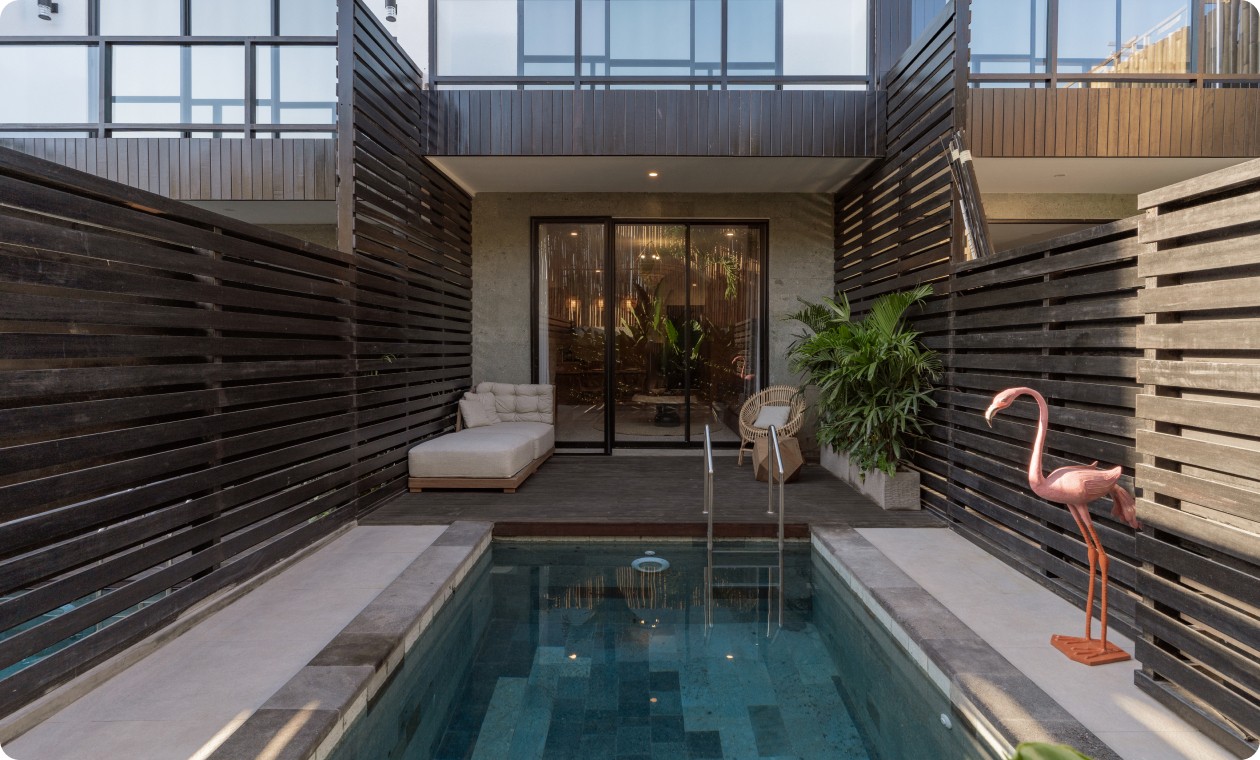
First and foremost, this applies to the layout of the property. Many pet-friendly villas in Bali are designed with enclosed gardens and fenced areas. This allows pets to roam freely without leaving the property. Having a green area where pets can stroll or relax is a significant advantage.
The architecture of such houses often features more spacious outdoor areas. Large terraces, courtyards, and gardens create a comfortable environment not only for people but also for animals. Unlike compact apartments, villas offer significantly more space.
The choice of materials is equally important. Property owners are increasingly using practical, wear-resistant surfaces. Stone or ceramic floors are easier to clean and are better suited for homes with pets. Furniture and textiles are also selected with ease of maintenance in mind.
Premium projects feature even more thoughtful solutions. Some villas feature dedicated areas for pets, small walking areas, or separate resting areas for pets. Such elements become part of the architectural design and enhance the property’s appeal in the rental market.
Pet-Friendly Properties as Part of the Luxury Segment
Interestingly, the pet-friendly concept is gradually expanding beyond standard rentals and is beginning to actively appear in the premium market segment. Luxury villa developers are increasingly considering this factor when designing new properties.
This is due to a shift in buyer personas. Wealthy investors, entrepreneurs, and business owners also frequently travel with pets. For them, the ability to live with a pet is becoming an important part of their comfort.
As a result, many luxury projects in Bali are beginning to integrate pet-friendly solutions into their infrastructure. Some villas feature separate walking areas, and residential complexes offer spaces where owners can spend time with their pets.
Additional services are also appearing in the premium segment. These may include partnerships with veterinary clinics, dog-sitting services, pet grooming, or organized walks. Thus, the pet-friendly concept is gradually becoming part of a fully-fledged luxury ecosystem.
In fact, this reflects a broader global trend: premium services are increasingly adapting to the lifestyle of pet owners.
Investment Potential of Pet-Friendly Properties
From an investment perspective, pet-friendly villas in Bali represent an interesting market niche. In a highly competitive rental environment, such additional benefits can significantly enhance the property’s appeal.
One key factor is the wider renter base. Pet owners face limited housing options, so pet-friendly properties automatically experience increased demand.
Furthermore, renters with pets often stay longer in the same property. Moving with a pet requires more time and preparation, so many prefer to choose a longer-term rental. This increases rental stability and reduces the risk of downtime.
Furthermore, renters with pets often stay longer in one place. Moving with a pet requires more time and preparation, so many prefer to choose a longer-term property. This increases rental stability and reduces the risk of downtime.
For investors, this means more stable cash flow. With growing demand for pet-friendly housing, such properties can demonstrate higher occupancy and stable income.
As a result, pet-friendly properties are gradually forming a distinct market segment in Bali. With the growing number of expats, remote professionals, and long-term residents, demand for such properties continues to increase.
Why pet-friendly properties will gradually become the market standard
While just a few years ago, pet-friendly properties were perceived as a niche offering, today this format is gradually becoming the new market norm. This is due to global lifestyle changes that directly impact the structure of housing demand.
In many countries, pet ownership is growing. According to international studies, more than half of households have at least one pet. Attitudes toward animals have changed: they are increasingly perceived not just as pets, but as full-fledged family members. This means that people are increasingly reluctant to leave their pets at home while traveling or on long-term relocations.
This trend is particularly noticeable among the younger generation of entrepreneurs, remote professionals, and digital nomads. This demographic makes up a significant portion of the international community in Bali. Many of them move to the island for months or years and seek to maintain their familiar lifestyle, including the ability to live with their pets.
As a result, the real estate market is gradually adapting to the new expectations of renters and buyers. Developers are beginning to incorporate pet-friendly concepts from the design stage. Enclosed gardens, spacious plots, comfortable materials, and well-thought-out infrastructure are becoming part of architectural solutions.
Another factor is competition in the rental market. As the number of villas and residential complexes grows, it is becoming increasingly important for property owners to stand out from other properties. Pet-friendly properties are becoming a factor in attracting a wider audience of renters.
Furthermore, pet-friendly properties can increase the property’s liquidity. Investors increasingly understand that flexible property use increases its value. Properties suitable for both tourists and long-term residents with pets enjoy more sustainable demand.
Similar changes have already occurred in developed real estate markets. In a number of countries, pet-friendly housing has become the standard, not the exception. A similar process will likely gradually occur in Bali. As the international community grows and the number of long-term residents increases, demand for such properties will only increase.
This is why many market experts believe that pet-friendly villas in Bali could evolve from a separate property category into one of the new standards for resort housing in the coming years.