The premium tourism and wellness industry is undergoing a major transformation in 2026. The concept of “luxury travel” is no longer limited to beach relaxation, spa treatments, and short-term recovery. More and more people view vacations as an opportunity to improve their physical condition, restore energy, normalize sleep, and reduce chronic stress levels.
It is against this backdrop that the popularity of biohacking hotels and longevity resorts is rapidly growing, where classic wellness is complemented by technologies for preventive medicine, body diagnostics, and cellular-level recovery.
Today, travelers are increasingly choosing between two formats: the traditional spa resort and the high-tech biohacking hotel. Despite their outward similarities, there is a fundamental difference between them—both in their approach to health and in the vacation model itself.
Superficial relaxation vs. systemic recovery
The main difference lies in the depth of the impact on the body and the ultimate goal of the guest’s stay.
A classic spa resort focuses primarily on relaxation and temporary stress relief. Massages, body wraps, saunas, and beauty treatments help reduce stress levels, improve mood, and recover from emotional strain. This format is ideal for a short-term getaway and mental reset.
However, the effect is usually short-lived and primarily works on a sensory level.
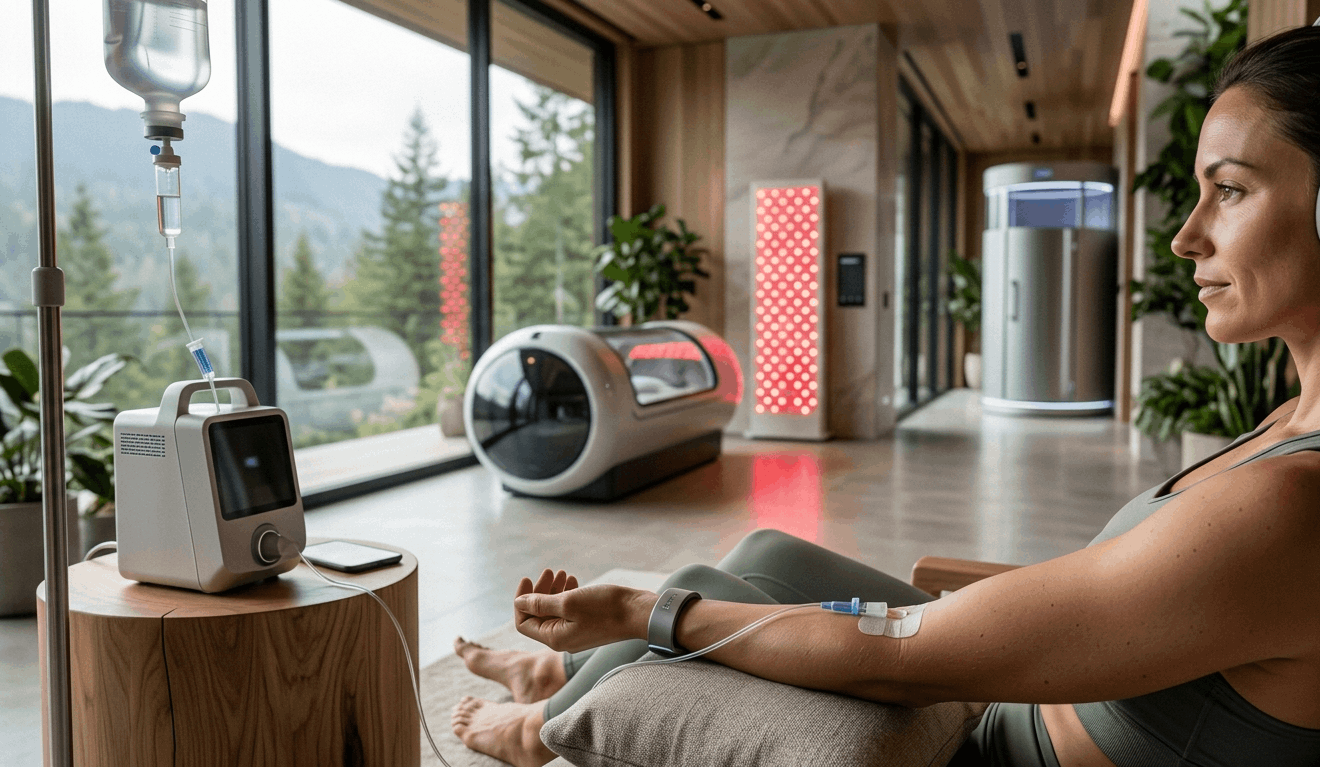
A biohacking hotel takes a different approach. Its goal is not simply to create a sense of relaxation, but to help the body restore its optimal state by working with physiological processes.
Therefore, biohacking hotels use technologies aimed at:
- improving sleep,
- reducing inflammatory processes,
- restoring energy,
- supporting metabolism,
- optimizing cognitive functions and recovery processes.
The focus is not on the symptom, but on the cause of the body’s reduced vitality.
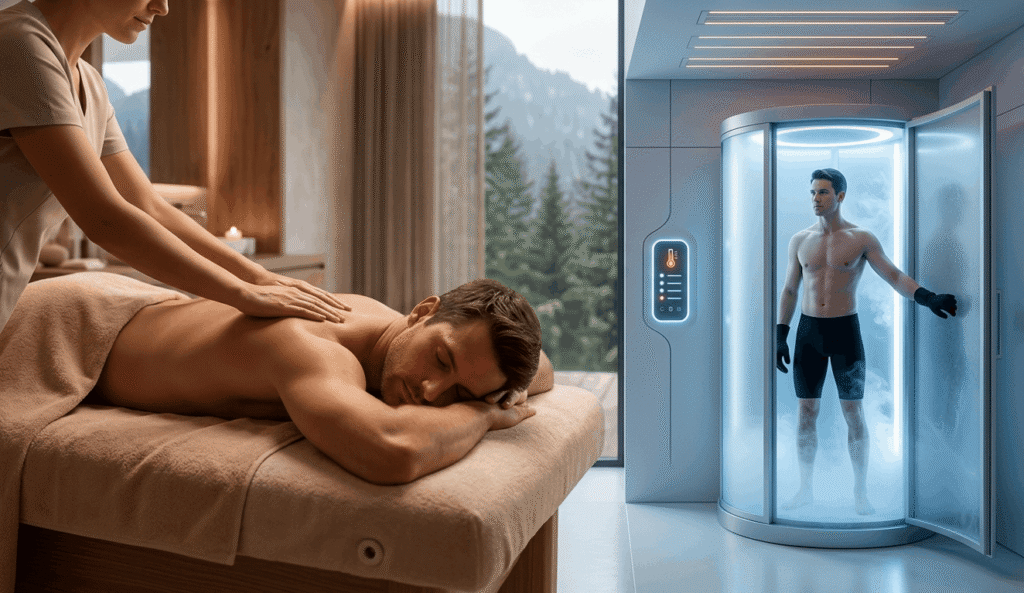
Massage vs. Cryotherapy and Modern Recovery Technologies
The difference between the two approaches is clearly illustrated by a comparison of the procedures themselves.
Classic massage improves blood circulation, helps relieve muscle tension, and promotes relaxation of the nervous system. It is an effective wellness practice that remains in demand worldwide.
However, in biohacking hotels, the recovery approach takes it to another level. Here, thermal technologies—such as cryotherapy and infrared saunas—are actively utilized.
During cryotherapy, the body is briefly exposed to extremely low temperatures. This controlled stress activates the body’s natural adaptation mechanisms: blood circulation improves, recovery processes accelerate, and inflammation levels decrease.
This is precisely why cryotherapy is particularly popular among entrepreneurs, athletes, and people with high-stress lifestyles.
Conventional skincare vs. regenerative medicine
Another important distinction relates to anti-aging approaches.
In traditional spa hotels, skincare is usually limited to cosmetic procedures: masks, peels, facial massages, and skincare rituals.
In premium-level biohacking centers, aesthetic medicine becomes part of an overall strategy for the body’s recovery.
Modern wellness complexes are increasingly using regenerative medicine approaches—exosome therapy, secretome therapy, collagen stimulators, and personalized anti-aging protocols.
The main goal of such procedures is not a temporary visual effect, but the stimulation of natural tissue regeneration processes.
Intuitive relaxation vs. personalization based on diagnostics
A traditional spa vacation is often built around the guest’s own wishes. A person chooses treatments based on their feelings and preferences.
Biohacking hotels operate differently—through the analysis of bodily data.
Before starting the program, guests are often offered:
- DEXA scans,
- comprehensive blood tests,
- body composition assessments,
- diagnosis of deficiencies,
- and analysis of sleep quality and stress levels.
Based on this data, a personalized recovery protocol is created, including nutrition, IV therapy, physical activity, and recovery treatments.
It is this personalization that sets the biohacking format apart from traditional wellness retreats.
The Economics of the Format: Why Biohacking Hotels Are Attracting Investors
From an investment perspective, biohacking resorts are becoming one of the most promising segments of the wellness real estate market.
The traditional hotel market is increasingly facing intense competition and dependence on seasonal tourism. Biohacking projects operate on a different model.
Guests come here not only for relaxation, but also for specific recovery and longevity programs. This extends the length of stay, increases the average check, and creates a more loyal customer base.
Additional revenue is generated by wellness and medical services:
- check-ups,
- IV therapy,
- cryotherapy,
- HBOT (hyperbaric chambers),
- anti-aging programs, and recovery protocols.
This is precisely why high-quality biohacking hotels are able to demonstrate higher profitability compared to traditional resort projects.
Biohacking hotels are shaping a new approach to the wellness industry, where vacationing becomes part of a long-term health and recovery strategy.
While a traditional spa helps you relax and temporarily reduce stress levels, the biohacking format focuses on deeper work with the body—through diagnostics, personalization, and modern recovery technologies.
This is precisely why the longevity and wellness real estate market today attracts not only travelers but also investors who view biohacking hotels as one of the most promising segments of premium hospitality.